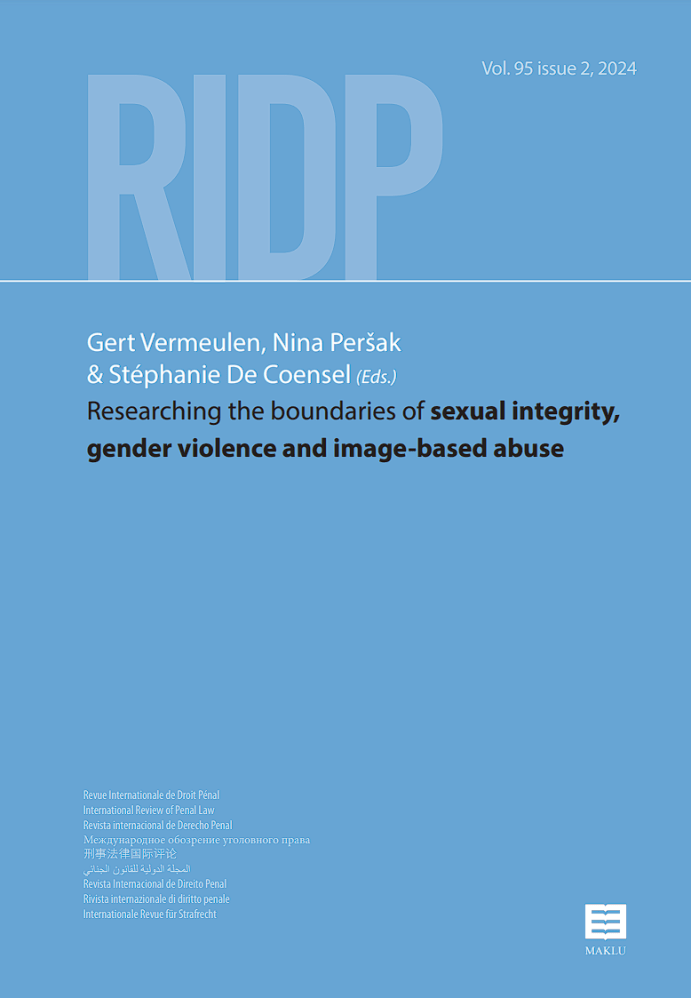
New article about non-consensual sexual deepfakes

Our new article ‘An empirical and legal analysis of sexual deepfakes in the EU, Belgium and the Netherlands‘ (.pdf), written by Sofie Royer, myself and Rolf van Wegberg, is now available in open access! I also created an automatically generated podcast about our article with Google’s Notebook LM. You can check it out below. Enjoy listening!

Research question

In our article we aim to answer the question: ‘How do sexual deepfakes proliferate online, to what extent is the non-consensual production, distribution, possession of, and/or access to sexual deepfakes of adults currently criminalised, and to what extent should it be criminalised in the future?’, with a combined empirical and legal approach.

 To that end, we conducted an explorative analysis of the online market for sexual deepfakes. The empirical research was focused on Telegram groups, in particular Dutch-language groups. This is combined with a legal analysis of the legal frameworks on sexual deepfakes in Belgium and the Netherlands.

Results

The research shows that sexual deepfakes proliferate on the clear web and in public Telegram groups. Subsequently, we have examined to what extent the non-consensual production, distribution, possession of, and/or access to sexual deepfakes are already criminalised and to what extent they should be criminalised.

From the legal analysis we conclude that – if there is any positive obligation to criminalise sexual deepfakes of adults at all – it is limited to the production and subsequent distribution of sexual deepfakes of existing people. We also find that the Digital Services Act could be particularly important in enforcing take downs and content moderation of deepfake contents.

Please cite as:

Royer, S., Oerlemans J.J., van Wegberg, R.S. (2024). An empirical and legal analysis of sexual deepfakes in the EU, Belgium and the Netherlands, pp. 459-482. In: Vermeulen, G. Peršak, N., & De Coensel, S. (ed.) (2024). Researching the boundaries of sexual integrity, gender violence and image-based abuse, Revue internationale de droit pénal, 95(2), Maklu.
New book on cybercrime

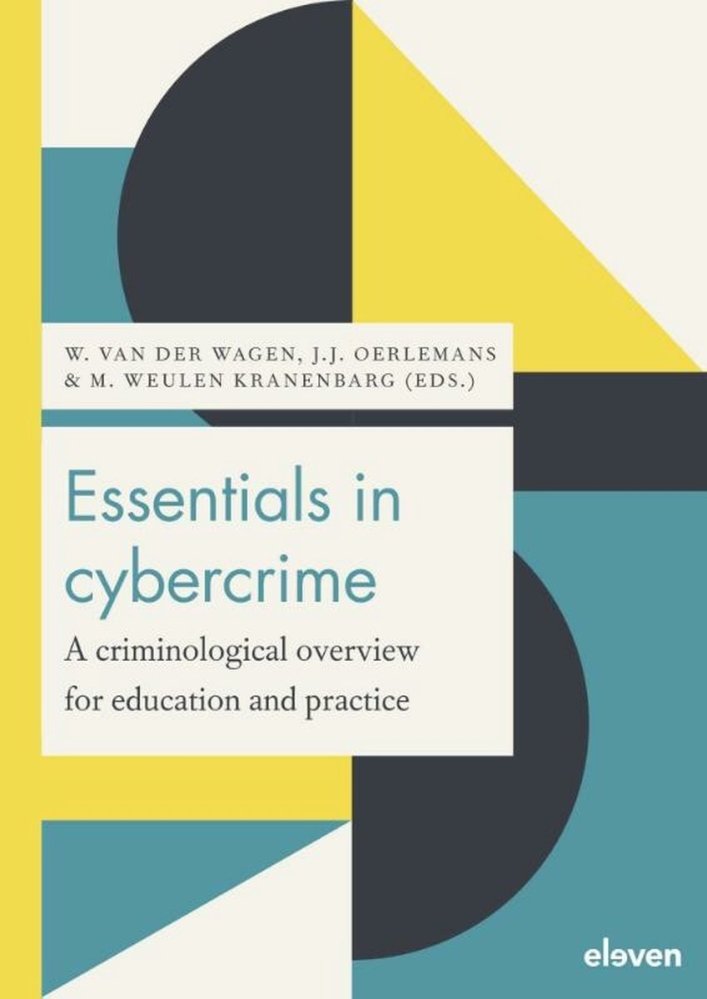
Yesterday, our new book ‘Essentials in cybercrime. A criminological overview for education and practice’ became available. Wytske van der Wagen, Marleen Weulen Kranenbarg, and me, are the editors of the book and we are proud of the result. In this blog post, I’ll briefly introduce the book and explain its background.

Background

A study book about the essentials of cybercrime was in our view necessary, in order to bring together knowledge about cybercrime in a conveniently arranged manner. That is why, in 2020, we published our (Dutch) book ‘Basisboek Cybercriminaliteit’, in which all the necessary basic knowledge about cybercrime was provided.

As some universities expressed the desire for an English version of the book, we decided to move forward with a translation. The current book is however not a literal translation. It is more internationally oriented, especially when it comes to legislation, it includes the most recent studies, and it also provides an entirely new chapter on organized cybercrime (Chapter 5). Like the Dutch version of our book, it aims to provide the essential knowledge of various facets of cybercrime.

Aim of the book and intended audience

Our book is intended for students and professionals who want to learn more about cybercrime. The book offers insight into the various manifestations and features of cybercrime, offender and victim characteristics, quantitative and qualitative methods for studying crime in the digital domain, criminological theories that can be used to understand cybercrime, and possible interventions.

In addition to criminological aspects, the book also deals with a number of legal topics, including the criminalisation of cybercrime, the detections process and the investigative powers that can be used by the police in the online domain.

The book is introductory in nature and is therefore are also suitable for those who are new to the subject of cybercrime. At the same time, the book discusses the various topics in depth and incorporates a broad range of studies and perspectives.

Contents and (co-)authors

In this book, we combine our own criminological and legal expertise in the development of cybercrime, our knowledge about cybercrime offenders and victims, and the investigation of cybercrime. We also asked experts in the fields of organised cybercrime, the victimisation of cybercrime and cybercrime interventions to complement our understanding of cybercrime and to contribute to this book.

We therefore thank our guest authors – Rik Beerthuizen, Maša Galič, Tamar Fischer, Thomas Holt, André van der Laan, Rutger Leukfeldt, Sifra Matthijsse, Take Sipma and Elina van ’t Zand – for their important contributions to this book.

Availability

Our book is published by Eleven and now available in the store of Eleven Publishing (with Chapter 1 freely available) and stores like Bol.com.

One year after publication, Chapter 3 about ‘Types of cybercrime and their criminalisation’ and Chapter 8 about ‘Cybercrime investigations’ will be available in open access.